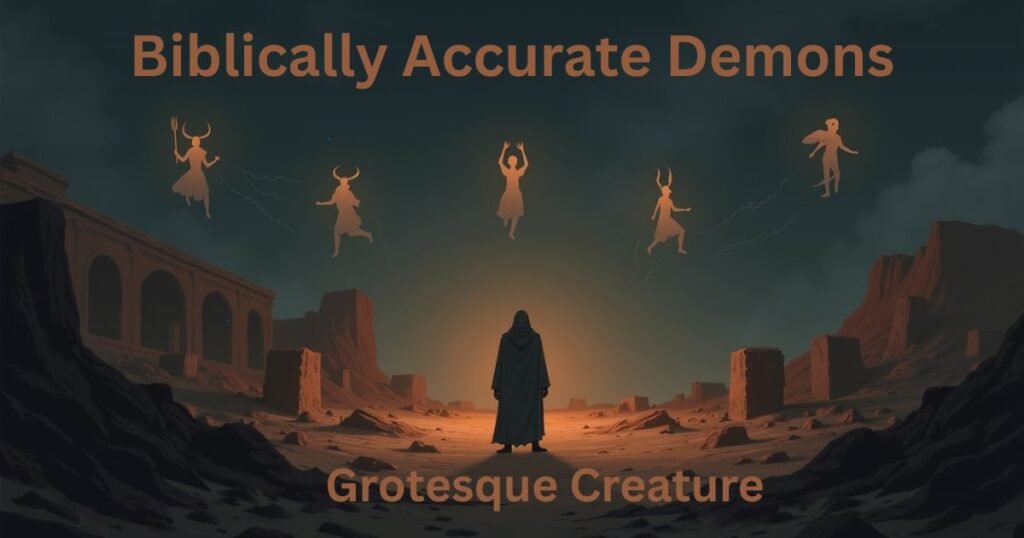
Picture a demon. What comes to mind? Perhaps you’re imagining a grotesque creature with red skin, horns jutting from its skull, clutching a pitchfork while ruling over hell’s flames. Now let me tell you something: that image? It’s nowhere in the Bible.
The truth about biblically accurate demons is far different from what Hollywood has sold us. Scripture presents a complex taxonomy of spiritual adversaries in Scripture each with distinct characteristics, limitations, and roles. This isn’t about sensationalism. It’s about truth.
Most Christians unknowingly blend medieval art, extrabiblical demonology, and pop culture demons vs Bible teachings into a confused mess. We’ll separate fact from fiction here. We’re diving deep into what the Old Testament and New Testament actually reveal about these spiritual enemies of believers.
Ready to discover the real biblical view of demons?
Understanding Biblical Terminology: Biblically Accurate Hebrew and Greek Words for Demons
Language reveals reality. The specific words Scripture uses for demons tell us volumes about their nature and function within God’s creation.
Here’s something fascinating: ancient Hebrew lacks a specific word for “demon” in the way we understand it today. That translation issue in demonology creates problems when we try forcing modern categories onto ancient texts. The Greeks had more precise terminology, which we’ll explore.
Hebrew Terms for Evil Spirits
The Old Testament employs several distinct Hebrew words for demons and malevolent spiritual beings. Each carries unique connotations that modern translations often obscure.
Shedim (שֵׁדִים) appears in Deuteronomy 32:17 and Psalm 106:37. This Hebrew word for demons refers specifically to entities worshiped through child sacrifice. When Israel offered their children to foreign gods, they were actually sacrificing “to shedim, not to God to gods they had not known.” The shedim meaning connects directly to idolatry and the horrific practice of offering children to Molech.
Se’irim (שְׂעִירִם) literally means “hairy ones” or “goat demons.” Leviticus 17:7 warns Israel not to sacrifice to se’irim anymore. These se’irim goat demons were associated with wilderness spirits and pagan worship practices involving goat imagery. Some scholars connect these to the satyr-like creatures of ancient Near Eastern mythology.
Lilith (לִילִית) appears once in Isaiah 34:14 during a prophecy about Edom’s desolation. The Lilith biblical meaning remains disputed. Some translations render it as “night creature” or “screech owl,” while others maintain “Lilith” as a night demon from ancient folklore. The ambiguity reflects Hebrew’s poetic and symbolic use of language.
Azazel (עֲזָאזֵל) shows up in Leviticus 16:8-10 during the Day of Atonement ceremony. The Azazel meaning in the Bible has generated centuries of debate. Is it a place (the wilderness), a concept (complete removal), or an actual demonic entity? The Book of Enoch later developed Azazel as a fallen angel, but Scripture itself remains ambiguous.
| Hebrew Term | Transliteration | Literal Meaning | Biblical References | Associated Practices |
|---|---|---|---|---|
| שֵׁדִים | Shedim | Destroyers/demons | Deut 32:17, Ps 106:37 | Child sacrifice, idolatry |
| שְׂעִירִם | Se’irim | Hairy ones/goats | Lev 17:7, 2 Chr 11:15 | Wilderness worship |
| לִילִית | Lilith | Night creature | Isaiah 34:14 | Desolation imagery |
| עֲזָאזֵל | Azazel | Complete removal (?) | Leviticus 16 | Scapegoat ritual |
Greek Words in the New Testament
The New Testament introduces precision. Greek terminology distinguishes between types and functions of demonic entities with remarkable specificity.
Daimonion (δαιμόνιον) appears over 60 times in the Gospels and Acts. This Greek word for demons became the standard term for evil spirits. Interestingly, classical Greek used “daimon” neutrally for divine beings. The New Testament exclusively employs it for malevolent spirits opposed to God.
Diabolos (διάβολος) means “slanderer” or “accuser.” This diabolos meaning accuser appears 37 times as a title for Satan himself. The word captures Satan’s primary function as the “accuser of the brethren” (Revelation 12:10).
Pneuma akatharton (πνεῦμα ἀκάθαρτον) the phrase “unclean spirit” appears 21 times. These unclean spirits in the New Testament cause impurity and distance people from God. Mark’s Gospel particularly favors this terminology over “daimonion.”
Beelzeboul (Βεελζεβούλ) is the title given to the prince of demons in Matthew 12:24. The Beelzebub in the Bible derives from a Philistine god’s name, “Baal-Zebub” (lord of flies). Jesus’ opponents accused Him of casting out demons by Beelzeboul’s power.
Here’s what matters: the Greek New Testament presents these beings as personal, intelligent, and under Satan’s organization. They’re not impersonal forces. They’re spiritual adversaries with knowledge, will, and purpose.
Read This Article: Biblically Accurate Satan
Why This Linguistic Understanding Matters
Knowing these terms prevents confusion. When Scripture speaks of “shedim,” it’s addressing specific entities connected to pagan worship. When it mentions “daimonion,” it’s describing unclean spirits possession and influence. These aren’t interchangeable categories.
Biblical demonology builds on this vocabulary. Without understanding the Hebrew and Greek foundations, we end up importing extrabiblical concepts into our theology. We’ll make false connections and draw wrong conclusions.
The biblical view of evil spirits emerges from careful attention to how Scripture itself categorizes these beings. Let’s examine that taxonomy now.
Complete Biblical Taxonomy of Demons and Evil Entities
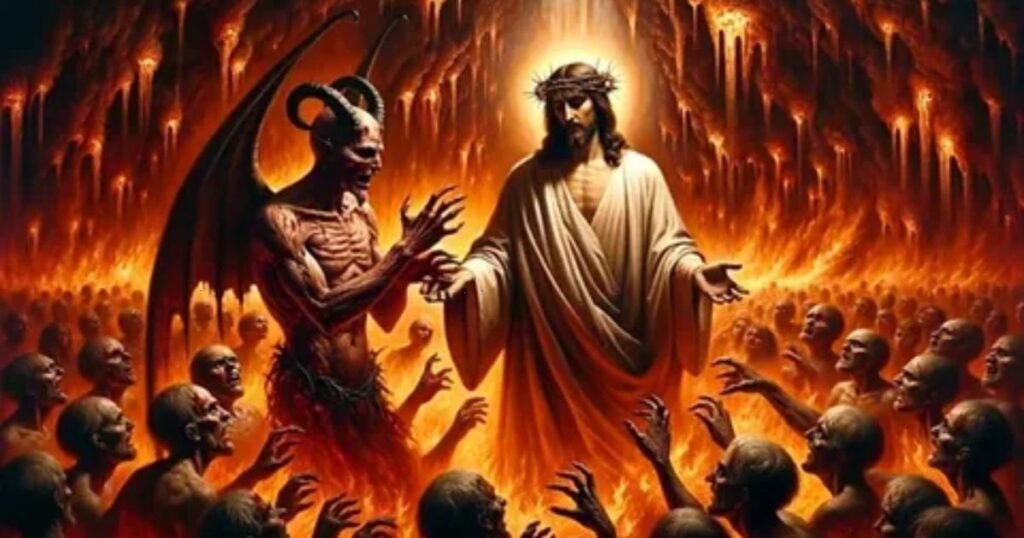
Scripture doesn’t present one monolithic category called “demons.” Instead, we find seven distinct classifications of spiritual entities operating in opposition to God’s purposes. Each deserves careful examination.
Category 1: New Testament Demons (Unclean Spirits)
These are what most people think of when hearing “demon.” The New Testament demonology presents these beings consistently and clearly.
Characteristics of New Testament demons:
- Sentient and intelligent – They recognized Jesus immediately (Mark 1:24: “I know who you are the Holy One of God!”)
- Capable of speech – Demons communicate with both Christ and their victims
- Seek embodiment – They desire to inhabit human or animal bodies (Matthew 8:28-32)
- Cause afflictions – Physical symptoms (muteness, seizures) and psychological torment
- Organized hierarchically – Matthew 12:45 mentions some demons being stronger than others
- Subject to Christ’s authority – Luke 10:17-20 shows disciples successfully casting them out in Jesus’ name
The Gerasene demoniac story (Mark 5:1-20) provides the most detailed account. Legion a demon identifying itself by a Roman military unit inhabited one man. This reveals demons can operate in groups and possess supernatural knowledge of contemporary culture.
Another crucial example appears in Mark 9:17-29. A father brings his son afflicted by a mute spirit that causes seizures and self-harm. The disciples failed to cast it out. Jesus explained: “This kind cannot be driven out by anything but prayer.” Different demons require different levels of spiritual authority.
The Python spirit in Acts 16:16-18 demonstrates demons can enable supernatural abilities. This slave girl practiced divination through demonic power. Paul finally commanded the spirit out after being “greatly annoyed” for many days showing restraint and discernment, not impulsive demon-hunting.
Category 2: Named Fallen Angels
Not all biblically accurate demons remain anonymous. Scripture identifies specific fallen angels by name.
Beelzebub/Beelzebul appears in Matthew 12:24 as the prince of demons. The name possibly derives from the Philistine god Baal-Zebub worshiped in Ekron (2 Kings 1:2). Jesus’ enemies accused Him of using Beelzebul’s power to cast out demons an accusation He devastatingly refuted through logic.
Abaddon/Apollyon emerges in Revelation 9:11 as “the angel of the abyss.” The Hebrew “Abaddon” and Greek “Apollyon” both mean “destroyer.” This being commands the apocalyptic locusts released from the bottomless pit creatures that torment but cannot kill.
Belial appears in 2 Corinthians 6:15 where Paul asks: “What harmony has Christ with Belial?” The name means “worthlessness” in Hebrew. Old Testament references to “sons of Belial” meant worthless, wicked people. By the Second Temple period, Belial had become personified as a chief demon.
Here’s critical context: many “named demons” from popular culture Asmodeus, Mammon, Belphegor, and others originate from extrabiblical sources like the Book of Enoch demonology or medieval grimoires. They’re not found in canonical Scripture.
Category 3: Hebrew Demons of the Old Testament
The Old Testament presents different terminology than the New Testament, reflecting ancient Israel’s unique theological framework.
Beyond shedim and se’irim already discussed, we find:
Resheph and Deber appear together in Habakkuk 3:5: “Plague went before him; pestilence followed in his steps.” These personified forces of plague and pestilence were worshiped as deities in Canaanite religion. Scripture demythologizes them they’re merely servants of God’s judgment, not independent powers.
The context matters enormously. Ancient Israelites lived surrounded by cultures that worshiped these entities as gods. The Hebrew Bible’s radical monotheism insisted these beings if they existed at all operated only under Yahweh’s sovereignty.
Category 4: Pagan Gods Presented as Demons
Here’s where things get fascinating. Scripture sometimes redefines pagan deities as demons and idols.
Baal dominated Canaanite religion as a fertility god. Baal worship involved sexual immorality and ritual prostitution. Numbers 25:3 describes Israel joining themselves to “Baal of Peor”n resulting in divine judgment. The biblical view consistently presents Baal as a demonic deception leading people away from the true God.
Molech (sometimes spelled Moloch) demanded the most horrific worship: child sacrifice. Leviticus 18:21 explicitly prohibits giving children to Molech. Parents would place their infants in the heated bronze arms of Molech’s idol while drums drowned out the screams. This Molech child sacrifice represented the ultimate perversion of worship.
Asherah was the Canaanite mother goddess, represented by wooden poles or trees. Judges 6:25-30 describes Gideon destroying his father’s altar to Baal and the Asherah pole beside it. These Asherah poles symbolized fertility cult worship that repeatedly seduced Israel into idolatry.
Dagon, the Philistine fish-god, meets humiliation in 1 Samuel 5:2-7. When the Philistines captured the Ark of the Covenant and placed it in Dagon’s temple, the idol fell face-down before the Ark twice. The second time, Dagon’s head and hands broke off.
The theological principle: 1 Corinthians 10:20 explains that pagan sacrifices are offered “to demons, not to God.” Whatever spiritual reality these idols represented, they weren’t divine. They were demons and pagan gods masquerading as deities worthy of worship.
| Pagan Deity | Primary Culture | Worship Practices | Biblical Response |
|---|---|---|---|
| Baal | Canaanite | Fertility rites, sexual immorality | Elijah’s confrontation (1 Kings 18) |
| Molech | Ammonite | Child sacrifice | Capital punishment commanded (Lev 20:2-5) |
| Asherah | Canaanite | Sacred poles, fertility worship | Destroy poles (Deut 16:21) |
| Dagon | Philistine | Fish-god worship | Humiliated before Ark (1 Sam 5) |
| Chemosh | Moabite | Human sacrifice | Denounced by prophets |
Category 5: Chaos Monsters
Ancient Near Eastern literature teems with cosmic chaos creatures. Scripture references some while demythologizing them under God’s absolute sovereignty.
Leviathan appears most prominently in Job 41, described in breathtaking detail as an unconquerable sea creature. The Leviathan biblical meaning extends beyond a mere animal. Psalm 74:14 and Isaiah 27:1 use Leviathan symbolically for forces opposing God’s creative order. Is Leviathan literal or metaphorical? Scripture allows both possibilities.
Behemoth receives equally impressive treatment in Job 40:15-24. Some identify it as a hippopotamus or elephant. Others see symbolic representation of chaotic natural forces. The Behemoth in Scripture demonstrates God’s power over creation’s most formidable beings.
Rahab (not the person from Jericho) appears in Job 26:12 and Psalm 89:10 as a chaos monster God defeated. “By his power he stilled the sea; by his understanding he shattered Rahab.” This Rahab chaos monster represented primordial opposition to divine order.
Characteristics of biblical chaos monsters:
- Represent opposition to God’s creative order
- Sometimes literal creatures, sometimes symbolic
- Demonstrate God’s ultimate sovereignty
- Used metaphorically for nations opposing Israel (Egypt called “Rahab” in Isaiah 30:7)
- Never portrayed as threats to God’s power
The interpretive debate continues. Are these actual demonic beings or poetic representations of natural forces and political enemies? Scripture doesn’t explicitly clarify. What’s certain: they’re completely subordinate to God’s authority.
Biblically Accurate Understanding of Ambiguous Entities and Satan
Not every spiritual being in Scripture fits neat categories. Some resist simple classification.
Category 6: Ambiguous Entities
Destroying angels appear throughout Scripture executing God’s judgment. Second Samuel 24:16 describes an angel destroying Jerusalem until God commands him to stop. Second Kings 19:35 records an angel killing 185,000 Assyrian soldiers overnight.
These destroying angels in the Bible operate differently from demons. They’re not rebellious. They’re obedient servants carrying out divine judgments. The angel of death in Exodus 12:23 who “passed over” Egypt functions similarly as God’s agent, not an independent malevolent force.
Characteristics of destroying angels:
- Execute God’s specific commands
- Operate under direct divine authority
- Not engaged in rebellion against God
- Perform judgment functions
- Distinct from demons in purpose and allegiance
This distinction matters enormously for biblical theology of evil spirits. Not every harmful spiritual event involves demonic activity. Sometimes God Himself sends judgment through angelic agents.
Category 7: Satan – Prince of Demons
Satan deserves separate, comprehensive examination. He’s the most misunderstood entity in Scripture.
Satan’s Names and Titles:
The biblical view presents Satan under multiple designations, each revealing different aspects of his nature:
- Satan (Hebrew: adversary) – Job 1:6, Zechariah 3:1
- Devil (Greek: slanderer) – Matthew 4:1
- Beelzebul (prince of demons) – Matthew 12:24
- The Evil One – Matthew 13:19
- Ruler of this world – John 12:31
- Prince of the power of the air – Ephesians 2:2
- The dragon – Revelation 12:9
- The ancient serpent – Revelation 12:9
- Accuser of the brethren – Revelation 12:10
- Angel of light – 2 Corinthians 11:14
- Father of lies – John 8:44
Each name highlights a different aspect of his activity. As Satan, he opposes God’s purposes. As Devil, he slanders and accuses. As angel of light, he practices angel of light deception appearing righteous while promoting evil.
Satan’s Origin and Fall
Where did Satan come from? Scripture provides fragments, not a complete narrative.
Biblical evidence for Satan’s fall:
Isaiah 14:12-15 describes a being fallen from heaven: “How you are fallen from heaven, O Day Star, son of Dawn!” This passage primarily addresses Babylon’s king. Yet church tradition has applied it to Satan’s rebellion. The Lucifer terminology comes from Latin Vulgate’s translation of “Day Star.”
Ezekiel 28:12-17 depicts an “anointed cherub” in Eden, perfect until “unrighteousness was found in you.” Again, the primary reference targets Tyre’s ruler. Christian theology has traditionally seen secondary reference to Satan’s fall.
Luke 10:18 offers Jesus’ direct statement: “I saw Satan fall like lightning from heaven.” This confirms Satan’s expulsion but doesn’t detail when or why.
Revelation 12:7-9 describes a war in heaven. Michael and his angels fought against “the dragon and his angels.” The dragon identified as Satan was thrown down to earth. A third of heaven’s angels apparently joined his rebellion (symbolized by the tail sweeping down a third of the stars).
Here’s honest assessment: direct statements about Satan’s fall are limited. Much systematic theology comes from interpreting prophetic passages originally addressed to human kings. We must hold our Satan’s rebellion theories with appropriate humility.
Satan’s Nature and Limitations
This might shock you: Satan is not God’s evil opposite. He’s a defeated, created being operating on borrowed time.
Satan’s capabilities:
- Tempts humanity (Matthew 4:1-11 shows him tempting Christ)
- Blinds minds of unbelievers (2 Corinthians 4:4)
- Accuses believers before God (Revelation 12:10)
- Prowls seeking victims (1 Peter 5:8)
- Transforms into angel of light (2 Corinthians 11:14)
- Had power of death defeated by Christ (Hebrews 2:14)
Satan’s limitations as a created being:
- Not omnipresent – He exists in one location at a time. Most “satanic attack” actually involves his demons.
- Not omniscient – He doesn’t know your thoughts or the future. He observes and strategizes.
- Not omnipotent – His power is delegated, not inherent. He’s infinitely weaker than God.
- Not eternal – He had a beginning and faces an end (Revelation 20:10)
- Operates only with permission – Job 1-2 demonstrates he needed God’s authorization to afflict Job
- Already defeated – Colossians 2:15 declares Christ “disarmed the rulers and authorities”
The biblical view emphasizes Satan’s limitations far more than pop culture does. First John 3:8 states plainly: “The reason the Son of God appeared was to destroy the works of the devil.”
Here’s what most people get wrong: Satan does not rule hell. He doesn’t torture souls or reign over demons in some underground kingdom. Revelation 20:10 shows his final destination: “The devil who had deceived them was thrown into the lake of fire and sulfur…and they will be tormented day and night forever.” Satan will be tormented in hell, not ruling it.
The Two Physical Descriptions in Scripture
Biblically accurate demons receive minimal physical description. No red skin. No horns. No pitchforks.
Ezekiel 28:13-14 (if referring to Satan) describes him as “full of wisdom and perfect in beauty,” an “anointed cherub” in Eden covered with precious stones. This portrays pre-fall splendor, not current appearance.
Revelation 12:3-4 presents apocalyptic imagery: “A great red dragon, with seven heads and ten horns.” This is clearly symbolic apocalyptic literature, not literal description. The seven heads likely represent complete authority; ten horns symbolize power.
The biblical reality: demons are spirits without inherent physical form. When they manifest, they can apparently take various appearances. But Scripture gives us almost nothing definitive about their visual nature.
How Christian Demonology Developed Through Extrabiblical Sources
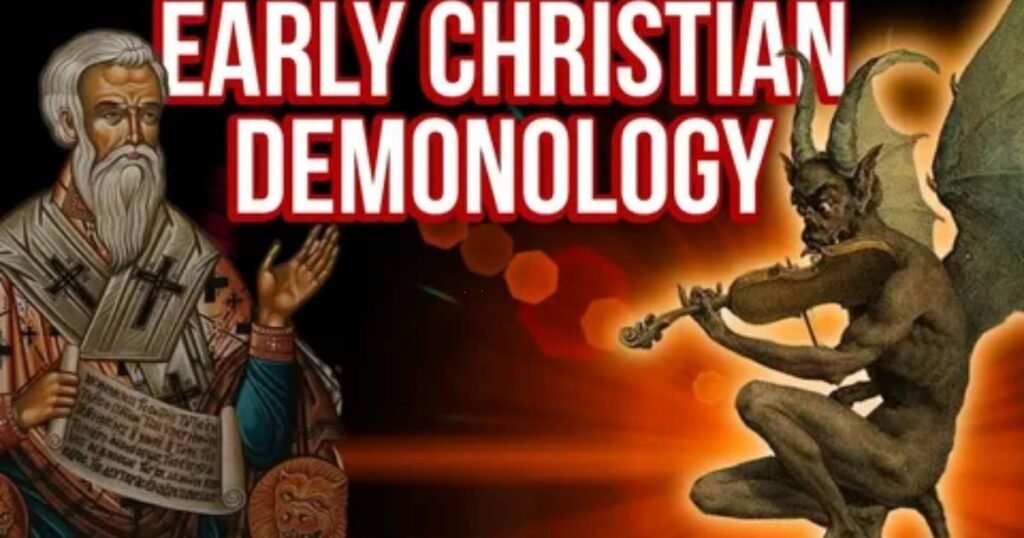
Much of what Christians “know” about demons doesn’t come from the Bible. Understanding this historical development prevents us from treating tradition as Scripture.
The Book of Enoch’s Massive Influence
First Enoch (also called Ethiopic Enoch) was written during the Second Temple period (300-100 BC). Though not canonical, its massive influence on Christian demonology cannot be overstated.
Enochian contributions to demonology:
The Book of Enoch provides elaborate details Scripture omits:
- Detailed fall narrative – Names 200 fallen angels (called Watchers) who descended to Mount Hermon
- Origin of demons – Claims demons are disembodied spirits of Nephilim (the giants of Genesis 6)
- Hierarchy of demons – Establishes specific ranks and functions
- Names of chief demons – Azazel leads the Watchers; Semjaza is another prominent leader
- Forbidden teachings – Watchers taught humanity warfare, cosmetics, astrology, and sorcery
The Nephilim biblical explanation in Genesis 6:1-4 remains cryptic. The “sons of God” married “daughters of men,” producing Nephilim. First Enoch interprets “sons of God” as angels the Watcher angels who fell through sexual sin with humans.
Here’s the complication: Jude 14-15 actually quotes 1 Enoch, giving it some legitimacy. Yet it’s not canonical Scripture in any Christian tradition except Ethiopian Orthodox.
The impact? Early church fathers accepted much Enochian theology. This profoundly shaped Western demonology in ways most Christians never realize.
Church Fathers’ Interpretive Contributions
Justin Martyr (100-165 AD) accepted the Watcher angels narrative from Enoch. He taught that demons were offspring of fallen angels.
Origen (185-254 AD) developed detailed angelology that included corresponding demonic hierarchies. He proposed angels fell through pride or negligence of divine contemplation.
Augustine of Hippo (354-430 AD) systematized demonic nature within his comprehensive theology. He emphasized that demons retain their angelic knowledge but use it for evil. Augustine’s framework demons as fallen angels with perverted will became standard Western theology.
These weren’t rogue theologians inventing doctrines. They were interpreting Scripture through available philosophical and literary frameworks. The distinction between biblical data and theological interpretation matters greatly.
Medieval Demonology’s Elaborations
The Middle Ages saw explosive growth in speculative demonology:
Grimoires (magical textbooks) cataloged demons with supposed names, ranks, and powers. The Lesser Key of Solomon lists 72 demons with elaborate descriptions. None appear in Scripture.
Hierarchies became incredibly detailed. Demons were organized into kingdoms, principalities, and specialized functions. Some supposedly caused nightmares; others induced lust or greed.
Demon catalogs proliferated. Alonso de Espina’s 1467 work claimed 133,316,666 demons existed. Johann Weyer’s 1563 catalog listed 7,409,127 demons under 72 princes.
This speculation moved far beyond biblical data into creative (and often bizarre) territory. Unfortunately, these medieval concepts still influence popular understanding of biblical demonology.
Literary Influence: Dante and Milton
Two literary works shaped Western demon imagery more than theology textbooks.
Dante’s Inferno (1320) created the vivid nine-circle hell still dominating imagination. Dante’s Satan sits frozen in ice at hell’s center a massive three-faced creature chewing on Judas, Brutus, and Cassius. This isn’t biblical. It’s brilliant poetry.
Milton’s Paradise Lost (1667) provided the definitive fall narrative. Milton’s Satan became a sympathetic character prideful but magnificent, defiant but compelling. Lines like “Better to reign in Hell than serve in Heaven” entered cultural consciousness.
These works became quasi-theological authorities in popular imagination. People unconsciously assume their vivid imagery derives from Scripture. It doesn’t.
Why This Historical Context Matters
Distinguishing biblical truth from tradition liberates us from error. When we know which ideas come from Scripture versus extrabiblical demonology, we can:
- Evaluate contemporary spiritual warfare teachings critically
- Avoid attributing authority to speculative traditions
- Ground our faith in revelation, not imagination
- Prevent unnecessary fear from fictional demon hierarchies
The Bible provides what we need to know. Speculation beyond Scripture creates confusion.
Distinguishing Demonic Possession from Oppression in Biblically Accurate Terms
These terms carry significant theological weight. Scripture reveals important distinctions that affect how believers understand spiritual warfare.
Defining Possession vs. Oppression
Demonic possession involves a demon inhabiting and controlling a person. The Greek term suggests being “demonized” under demonic control internally.
Demonic oppression describes external attack, influence, or harassment without internal control.
| Aspect | Possession | Oppression |
|---|---|---|
| Location | Internal indwelling | External assault |
| Control Level | Significant internal control | External pressure/influence |
| Biblical Examples | Mark 5:1-20 (Legion), Luke 8:27-39 | Job 1-2, 2 Cor 12:7 (Paul’s thorn) |
| Physical Symptoms | Often dramatic (superhuman strength, altered voice) | Variable (illness, circumstantial attacks) |
| Believer Status | Not found in Christians | Possible for Christians |
| Deliverance | Cast out through Christ’s authority | Resisted through spiritual armor |
This distinction prevents confusion. When Scripture describes Jesus casting out demons, it’s addressing possession. When Paul discusses spiritual warfare in Ephesians 6, he’s addressing oppression against believers.
Can Christians Be Possessed?
This question generates heated debate. Scripture provides strong evidence against Christian possession.
Biblical foundations against Christian possession:
First, the Holy Spirit indwells believers (1 Corinthians 6:19). Your body is the Spirit’s temple. Can the Holy Spirit cohabit with demons? The concept contradicts the nature of God’s exclusive presence.
Second, believers are “transferred from the domain of darkness to the kingdom of light” (Colossians 1:13). This represents fundamental change in spiritual authority and allegiance.
Third, 1 John 5:18 promises: “We know that everyone who has been born of God does not keep on sinning, but he who was born of God protects him, and the evil one does not touch him.” The context suggests protection from possession.
Fourth and perhaps most compelling not one New Testament example shows a demon-possessed believer. The Gospels and Acts record numerous demonic possession cases. Never once is a follower of Christ possessed. That significant omission speaks volumes.
The overwhelming consensus of orthodox Christianity affirms: Christians cannot be possessed.
Can Christians Be Oppressed?
While possession seems biblically excluded, oppression clearly occurs.
Matthew 16:23 shows Satan working through Peter. Jesus rebuked him: “Get behind me, Satan!” Peter wasn’t possessed, but satanic influence affected his thinking.
Paul’s “thorn in the flesh” (2 Corinthians 12:7) was “a messenger of Satan to harass me.” Whether physical illness or circumstantial difficulty, Paul experienced demonic oppression as a believer.
Acts 5:3 describes Satan filling Ananias’ heart to lie. Again, not possession but satanic influence on a professing believer.
Ephesians 6:12 assumes believers face spiritual warfare: “We do not wrestle against flesh and blood, but against the rulers, against the authorities, against the cosmic powers over this present darkness.”
The biblical view of demonic oppression of believers is clear and consistent.
Forms of Demonic Oppression Against Believers
Categories of demonic oppression:
Mental/Emotional:
- Persistent condemning thoughts beyond normal conscience
- Irrational fears and debilitating anxieties
- Oppressive depression (distinct from clinical depression)
- Intrusive blasphemous thoughts
Physical:
- Unexplained illnesses resisting medical treatment
- Chronic sleep disturbances and nightmares
- Physical attacks (though quite rare)
Relational:
- Unusual patterns of conflict in Christian relationships
- Division within church communities
- Specific attacks on marriages and families
- Isolation from fellowship
Circumstantial:
- Pattern of “coincidental” obstacles to ministry
- Economic or material setbacks during spiritual growth
- Hindrances to evangelistic efforts
Critical caveat: Not every problem is demonic. Wisdom and discernment distinguish normal difficulties from spiritual warfare. Blaming demons for everything creates paranoia. Ignoring their reality creates vulnerability.
Protection and Response for Believers
Biblical protection isn’t complicated or mystical:
Submit to God (James 4:7) – This is the foundation. Rebellion creates vulnerability.
Resist the devil (James 4:7) – Active opposition is required, not passive hoping.
Put on armor (Ephesians 6:11-18) – Daily spiritual preparation through truth, righteousness, gospel, faith, salvation, and God’s Word.
Stand firm (Ephesians 6:13) – Don’t retreat. Hold your ground.
The authority of Christ over demons extends to believers. Luke 10:19 promises: “I have given you authority to tread on serpents and scorpions, and over all the power of the enemy.”
Clarifying Contemporary Misunderstandings: Pop Culture vs. Biblical TrutH

Hollywood creates demons. Scripture barely describes them. The gap between these is enormous.
Physical Appearance: Fiction vs. Scripture
| Element | Pop Culture Depiction | Biblical Reality |
|---|---|---|
| Skin color | Red, sometimes black or gray | Never described |
| Horns | Standard feature | Never mentioned |
| Pitchfork | Common accessory | Not in Scripture |
| Wings | Bat-like, leathery | Angels have wings; demons not described with them |
| Visibility | Often visibly manifest | Spirits invisible unless choosing to manifest |
| Body type | Grotesque, monstrous | No physical body described |
The medieval demon imagery that dominates culture has zero biblical basis. These images originated from artistic imagination, pagan mythology, and cultural evolution not Scripture.
Power Level: Exaggeration vs. Reality
Movies exaggerate demonic power dramatically. The Exorcist created expectations of levitation, head-spinning, and supernatural abilities that Scripture never attributes to demons.
Biblical limitations on demonic power:
Demons cannot:
- Create life or perform true miracles
- Know the future with certainty
- Read human thoughts (they observe and deduce)
- Be everywhere simultaneously
- Act without God’s sovereign permission (Job 1-2)
- Ultimately harm true believers (Romans 8:38-39)
- Prevent God’s purposes from being accomplished
First John 4:4 settles the power question: “He who is in you is greater than he who is in the world.”
The spiritual armor of God (Ephesians 6:13-18) provides complete protection. Truth, righteousness, gospel readiness, faith, salvation assurance, God’s Word, and prayer these defensive weapons suffice against all demonic schemes.
Demonic Possession: Hollywood vs. Scripture
Pop culture portrayal:
- Theatrical, violent manifestations
- Levitation and superhuman strength
- Speaking unknown ancient languages
- Violent reactions to crosses, holy water, religious objects
- Elaborate exorcism rituals with Latin chants
Biblical portrayal:
- Often subdued symptoms (Mark 9:17-29 describes seizures and muteness)
- Recognition of Christ’s deity
- Simple commands suffice (Mark 1:25: “Be silent and come out!”)
- No complex rituals needed
- Faith and authority matter not formulas or ceremonies
Jesus casting out demons typically involved brief, authoritative commands. He didn’t need holy water, crucifixes, or hour-long ceremonies. His intrinsic authority sufficed.
Satan’s Role: Misconceptions Clarified
Correcting Satan’s role misunderstandings:
❌ Misconception: Satan rules hell and tortures souls
✅ Biblical truth: Satan will be tormented in hell (Revelation 20:10), not ruling it
❌ Misconception: Satan is God’s evil opposite equal but opposite
✅ Biblical truth: Satan is a created being, infinitely inferior to God
❌ Misconception: Satan personally tempts everyone
✅ Biblical truth: Satan is one being in one location; his demons perform most attacks
❌ Misconception: Satan can possess Christians
✅ Biblical truth: No scriptural evidence supports Christian possession
❌ Misconception: Spiritual warfare means constant demon-fighting
✅ Biblical truth: Warfare includes standing firm in truth and resisting temptation
The Satan biblical definition emphasizes his role as adversary and accuser not some cosmic equal to God engaged in eternal dualistic struggle.
Why These Misunderstandings Matter
Practical implications:
Fear factor – Exaggerated demonic power creates unnecessary anxiety among believers. Perfect love casts out fear (1 John 4:18).
Ineffective ministry – Using medieval methods based on tradition rather than biblical models produces questionable results.
Distorted theology – Misunderstanding Satan affects how we understand God’s sovereignty and Christ’s victory.
Wasted energy – Fighting imaginary battles neglects real spiritual warfare issues like truth, righteousness, and holiness.
Credibility loss – Bizarre spiritual warfare practices damage Christian witness to skeptical observers.
Spiritual Warfare: Practical Protection and Authority
Biblically accurate demons aren’t movie monsters. They’re real enemies requiring real strategy grounded in Scripture.
The Reality of Spiritual Warfare
Ephesians 6:12 establishes the framework: “We do not wrestle against flesh and blood, but against the rulers, against the authorities, against the cosmic powers over this present darkness, against the spiritual forces of evil in the heavenly places.”
Note the progression: rulers → authorities → cosmic powers → spiritual forces. This suggests demonic organization, not chaos.
Second Corinthians 10:3-5 clarifies: “Though we walk in the flesh, we are not waging war according to the flesh. For the weapons of our warfare are not of the flesh but have divine power to destroy strongholds.”
First Peter 5:8 warns: “Your adversary the devil prowls around like a roaring lion, seeking someone to devour.”
Key principle: Warfare is primarily defensive, not offensive. We stand firm and resist we don’t attack or seek out demons.
The Armor of God (Ephesians 6:13-18)
Paul’s metaphor draws on Roman military equipment believers would recognize.
Components of spiritual armor:
- Belt of Truth (v. 14)
- Personal integrity and honesty
- Knowing and believing biblical truth
- Truth holds everything else together
- Breastplate of Righteousness (v. 14)
- Right living protects vital spiritual organs
- Both positional righteousness (Christ’s) and practical righteousness (holy living)
- Shoes of Gospel Readiness (v. 15)
- Prepared to share good news
- Standing firm without fleeing fear
- Shield of Faith (v. 16)
- Extinguishes enemy’s flaming arrows
- Trust in God’s promises and character
- Helmet of Salvation (v. 17)
- Protects mind and thoughts
- Assurance of salvation prevents doubt
- Sword of the Spirit (v. 17)
- God’s Word the only offensive weapon
- Jesus used Scripture against Satan’s temptations (Matthew 4:1-11)
- Prayer (v. 18)
- Communication with the Commander
- Constant alertness and intercession
These aren’t magical incantations or mystical formulas. They’re practical spiritual disciplines that create resilience against demonic schemes.
Authority Over Demons
Believers possess delegated authority through Christ. This isn’t personal power it’s positional authority.
Luke 10:19 records Jesus’ promise: “Behold, I have given you authority to tread on serpents and scorpions, and over all the power of the enemy, and nothing shall hurt you.”
Mark 16:17 lists signs accompanying believers: “In my name they will cast out demons.”
Exercising spiritual authority:
- Grounded in identity in Christ – Not personal merit or ability
- Through Jesus’ name – Not magical formulas or dramatic rituals
- With faith and confidence – Not fear or uncertainty
- In specific situations – Not constant “demon hunting” ministry
- With discernment – Not attributing every problem to demons
Acts 16:18 shows Paul’s approach. After a possessed slave girl followed them “for many days,” Paul finally commanded the spirit out. Note the restraint he didn’t immediately pursue deliverance ministry. He exercised discernment about timing.
Resisting Satan’s Schemes
Second Corinthians 2:11 warns we must not be “ignorant of his designs.” What are Satan’s primary schemes?
Common demonic strategies:
- Deception through false teaching – 2 Corinthians 11:13-15 warns of false apostles and Satan disguising himself as an angel of light
- Accusation producing guilt/shame – Revelation 12:10 identifies Satan as “the accuser”
- Division within Christian community – Creating conflict and disunity
- Distraction from spiritual priorities – Trivial concerns replacing eternal focus
- Discouragement in faith journey – Attacks during spiritual growth or ministry effectiveness
Biblical response:
- Know his tactics (2 Corinthians 2:11)
- Stand in truth (John 8:44 calls Satan “father of lies”)
- Resist immediately (James 4:7: “Resist the devil and he will flee”)
- Stay alert (1 Peter 5:8: “Be sober-minded; be watchful”)
Closing Open Doors
Some activities create vulnerability to demonic oppression. Scripture identifies specific footholds.
| Potential Foothold | Biblical Warning | Solution |
|---|---|---|
| Unforgiveness | Ephesians 4:26-27 | Forgive others as Christ forgave you |
| Persistent sin | 1 John 3:8 | Confess and repent genuinely |
| Occult involvement | Deuteronomy 18:10-12 | Renounce completely and destroy materials |
| Sexual immorality | 1 Corinthians 6:18 | Flee and pursue purity |
| Pride | James 4:6 | Humble yourself before God |
| Substance abuse | Ephesians 5:18 | Be filled with Spirit instead |
Acts 19:18-20 describes Ephesian believers who “practiced magic arts” bringing their books and burning them publicly. Renunciation requires action, not merely internal decision.
Understanding Biblically Accurate Demons: A Summary
Let’s consolidate everything into accessible truth.
Core truths about biblically accurate demons:
They’re real but limited. Scripture confirms their existence throughout both Testaments. But they operate under God’s sovereign authority never beyond His control.
Categories matter. The seven distinct biblical categories reveal complexity. Not all spiritual adversaries function identically. Understanding taxonomy prevents confusion.
Language provides precision. Hebrew words for demons (shedim, se’irim) and Greek words for demons (daimonion, pneuma akatharton) reveal specific characteristics. Attention to biblical terminology grounds theology in text.
Much “knowledge” is extrabiblical. Church tradition, medieval elaboration, and literary works added to Scripture. Distinguishing biblical data from tradition prevents error. The Book of Enoch demonology influenced Christian thinking profoundly yet it’s not canonical.
Christians have protection and authority. Believers cannot be possessed but may face oppression. The spiritual armor of God and authority in Jesus’ name provide complete defense.
Pop culture distorts reality. Medieval demon imagery, Hollywood exaggerations, and folk religion create false expectations. Biblical descriptions emphasize spiritual nature and God’s supremacy.
Spiritual warfare is defensive. We stand firm and resist we don’t pursue demons. The battle has been won through Christ’s death and resurrection.
Final encouragement:
Understanding biblically accurate demons removes **fear and superstit
ion**. God’s truth liberates from both denial and obsession. His authority supersedes all demonic power. His victory is complete and irreversible.
The territorial spirits in Daniel (Daniel 10:13 mentions the “prince of Persia”) remind us that spiritual realities operate behind political events. Yet Michael the archangel overcame this resistance. God’s purposes prevail.
When you grasp the biblical view of demons their nature, limits, and defeat you’re equipped for spiritual battle. Not through elaborate rituals or fearful preoccupation, but through simple faith in Christ’s finished work.
Practical application:
Study Scripture, not speculation. Build theology on biblical foundation, not tradition or experience. Exercise discernment in spiritual matters without becoming paranoid or obsessive. Stand firm in faith and truth. Live in the authority Christ has delegated.
Remember always: “Submit yourselves therefore to God. Resist the devil, and he will flee from you” (James 4:7).
The prince of demons has been defeated. His demons operate on borrowed time. Their final destiny is sealed in the lake of fire. Meanwhile, believers walk in victory not through their strength, but through Him who conquered death and hell.
Don’t obsess over demons. Focus on Christ. Walk in His authority. Stand firm in truth. The One in you is infinitely greater than any spiritual force arrayed against you.
That’s the biblical reality. That’s the liberating truth. That’s what Scripture actually teaches about biblically accurate demons.