
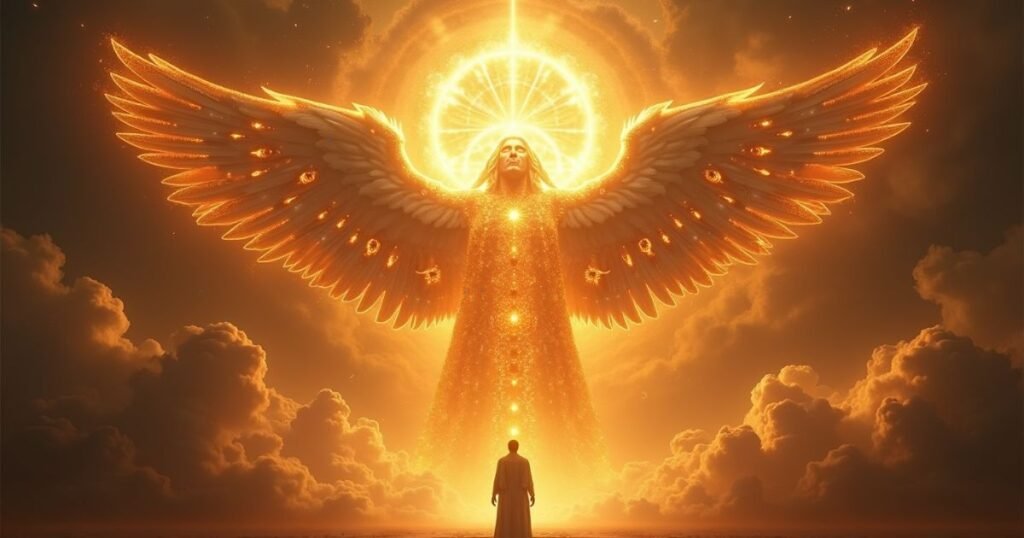
When most people picture angels, they imagine gentle, beautiful beings with flowing robes and delicate wings. Maybe they envision chubby cherubs on Valentine’s Day cards. Perhaps they think of graceful guardians watching over sleeping children. The reality Scripture presents is dramatically different and far more magnificent.
Biblically accurate angels are powerful, often terrifying celestial beings whose appearances caused witnesses to fall on their faces in fear. These ministering spirits execute divine judgment, wage cosmic warfare, and stand before God’s throne proclaiming His holiness. Understanding angels in the Bible requires us to set aside centuries of sanitized imagery and examine what Scripture actually reveals about these supernatural beings.
Let’s explore the true nature of angels through the lens of biblical revelation. You’ll discover why these heavenly messengers repeatedly say “Fear not” when appearing to humans. The answer might surprise you.
The Biblical Foundation of Angels
Scripture introduces us to angelic beings without apology or extensive explanation. They simply appear throughout salvation history as established participants in God’s cosmic order. Before we examine specific types of angels, we need to understand their fundamental nature.
What Scripture Reveals About Angels
The Bible presents angels as created spiritual beings who serve God’s purposes exclusively. Hebrews 1:14 describes them clearly: “Are not all angels ministering spirits sent to serve those who will inherit salvation?” This verse captures their essence perfectly they exist to minister and serve according to divine will.
Angels possess remarkable intelligence, though not omniscience. They demonstrate immense power, yet remain subordinate to God. Scripture consistently portrays them as immortal beings who neither marry nor reproduce. Luke 20:36 confirms that angels “can no longer die; for they are like the angels.”
Key characteristics of biblical angels include:
- Created before humanity (Job 38:7 mentions their presence at creation)
- Innumerable in quantity (Hebrews 12:22 speaks of “thousands upon thousands”)
- Organized in ranks and hierarchies (Colossians 1:16 mentions thrones, powers, rulers)
- Capable of appearing in human form (Hebrews 13:2)
- More powerful than humans yet less powerful than God
- Deeply interested in human salvation (1 Peter 1:12)
The Etymology and Meaning of ‘Angel’
Understanding the word “angel” itself reveals much about these beings. The Hebrew term mal’akh means messenger or envoy one sent with a specific purpose. Greek Scripture uses angelos, which carries identical meaning.
This linguistic foundation matters tremendously. Angels aren’t defined primarily by their appearance or nature but by their function. They’re sent ones, dispatched by Yahweh to accomplish divine purposes. Whether delivering messages, executing judgment, or warring against evil forces, angels fulfill missions from heaven.
The angel etymology reminds us that these celestial beings exist for God’s glory, not their own. They serve as intermediaries between the spiritual and material realms, bridging heaven and earth.
Read This Article: Biblically Accurate Demons
Angels as Spiritual Beings and Ministering Spirits
Angels exist primarily in the spiritual realm, not the physical one. They possess bodies, but these bodies differ fundamentally from human flesh. Paul distinguishes between earthly and heavenly bodies in 1 Corinthians 15:40, acknowledging different types of existence.
Despite their spiritual nature, angelic beings can interact powerfully with material reality. They roll away massive stones, break chains, shut lions’ mouths, and strike down armies. Their ability to manifest physically while remaining fundamentally spiritual makes them uniquely suited for their role connecting divine and human spheres.
Contrasting Biblical Angels with Popular Culture
Modern culture has domesticated angels almost beyond recognition. This transformation didn’t happen overnight it took centuries of artistic reinterpretation and cultural sanitization to transform Scripture’s fearsome warriors into gentle, non-threatening figures.
How Modern Media Misrepresents Angels
Renaissance art initiated a dramatic shift in angelic representation. Artists like Raphael painted angels as beautiful young people with soft features and graceful wings. This humanization continued through Baroque period and into modern times, creating what we now consider “traditional” angel imagery.
Hollywood amplified this trend exponentially. Films like “It’s a Wonderful Life” portrayed angels as bumbling, friendly helpers who earn their wings. Television shows like “Touched by an Angel” presented them as warm, maternal figures offering gentle encouragement. These depictions prioritize emotional comfort over biblical accuracy.
| Popular Culture Angels | Biblically Accurate Angels |
|---|---|
| Beautiful humans with feathered wings | Often multi-faced, covered with eyes |
| Gentle, sweet, approachable | Terrifying enough to require “Fear not” |
| Harp-playing worshipers | Warriors executing divine judgment |
| Female or childlike appearance | Masculine, powerful presentation |
| Decorative and non-threatening | Functional and purposeful |
The commercial incentive behind these sanitized depictions is obvious. Greeting card companies can’t sell terrifying, multi-winged beings covered with eyes. Baby shower decorations featuring wheels within wheels covered with eyes wouldn’t exactly fly off shelves. So culture gradually reshaped angels into marketable imagery.
Why Angels Say ‘Fear Not’ in Scripture
This phrase appears repeatedly throughout biblical angel encounters. When Gabriel appeared to Mary, his first words were “Do not be afraid” (Luke 1:30). Angels told shepherds the same thing: “Fear not: for, behold, I bring you good tidings” (Luke 2:10). Daniel repeatedly fell face-down in terror before angelic visitors.
These weren’t patronizing reassurances to nervous people. They were necessary interventions to prevent witnesses from dying of fright. The sheer glory, power, and otherness of angels overwhelms human senses. Their appearances triggered visceral terror in everyone who encountered them.
Consider the shepherds’ experience in Luke 2:9: “An angel of the Lord appeared to them, and the glory of the Lord shone around them, and they were terrified.” The text doesn’t say they were startled or surprised they were terrified. Only after this reaction did the angel say “Fear not.”
Angels function as warriors and executors of divine judgment throughout Scripture. One angel killed 185,000 Assyrian soldiers in a single night (2 Kings 19:35). Angels destroyed Sodom and Gomorrah completely. They carry swords, command heavenly armies, and pour out God’s wrath during Revelation’s judgments.
Mighty acts angels perform include:
- Striking enemies dead instantly (Acts 12:23)
- Rolling away stones weighing thousands of pounds (Matthew 28:2)
- Shutting hungry lions’ mouths (Daniel 6:22)
- Breaking prisoners from chains and opening iron gates (Acts 12:7)
- Announcing world-changing events with authority (Luke 1:26-38)
- Destroying entire cities (Genesis 19:13)
Archangels: The Named Messengers of Heaven
Among countless angels, Scripture names only a select few. This selectivity emphasizes their unique roles in salvation history. The term “archangel” appears rarely in Scripture only Jude 1:9 and 1 Thessalonians 4:16 use it explicitly.
Michael: The Warrior Prince
Michael the archangel stands as Israel’s defender and heaven’s chief warrior. His name poses a rhetorical question: “Who is like God?” This name becomes a battle cry asserting God’s supremacy over all challengers.
Daniel 10:13 identifies Michael as “one of the chief princes,” suggesting multiple archangels exist even though Scripture names only him. Daniel 10:21 and 12:1 repeatedly emphasize Michael’s role protecting Israel against spiritual opposition.
Michael’s roles in Scripture include:
- Contending with Satan over Moses’ body (Jude 9)
- Fighting for Israel against spiritual princes of Persia and Greece (Daniel 10)
- Standing guard over God’s people during tribulation (Daniel 12:1)
- Leading angelic armies against the dragon in cosmic warfare (Revelation 12:7)
- Serving as advocate and protector for believers
Revelation 12:7-9 describes Michael’s ultimate victory: “Michael and his angels fought against the dragon, and the dragon and his angels fought back. But he was not strong enough, and they lost their place in heaven.”
Gabriel: God’s Chief Herald
Gabriel the messenger appears at pivotal moments in salvation history. His name means “God is my strength” appropriate for one who delivers heaven’s most significant announcements. Unlike Michael, who wages war, Gabriel primarily functions as divine herald.
Gabriel appeared to Daniel explaining complex end-times visions (Daniel 8:16, 9:21). Centuries later, he announced John the Baptist’s miraculous conception to Zechariah (Luke 1:19). Most famously, Gabriel brought news of Jesus’ incarnation to Mary (Luke 1:26-38).
Notice the pattern: Gabriel appears during pivotal transitions in God’s plan. He doesn’t merely deliver routine messages but announces major developments in redemption history. His appearances mark turning points when heaven intersects earth dramatically.
The Unique Role of Named Angels
Why does Scripture name so few angels? Hebrew culture considered naming deeply significant names revealed nature, purpose, and authority. By limiting named angels to Michael and Gabriel (plus Raphael in deuterocanonical texts), Scripture focuses our attention on their specific missions rather than encouraging angel veneration.
Paul warns against angel worship in Colossians 2:18: “Do not let anyone who delights in false humility and the worship of angels disqualify you.” The Bible’s restraint in naming angels protects against this very temptation.
Seraphim: The Fiery Worshipers at God’s Throne
Isaiah 6 introduces us to seraphim perhaps the most exalted angels in Scripture. The Hebrew term saraph means “burning ones,” suggesting both their radiance and purifying function. These celestial beings surround God’s throne in continuous worship.
The Six Wings and Their Symbolic Meaning
Isaiah 6:2 describes seraphim with remarkable detail: “Above him were seraphim, each with six wings: With two wings they covered their faces, with two they covered their feet, and with two they were flying.”
Each wing pair serves distinct purpose:
- Two wings covering faces: Even seraphim cannot look directly upon God’s holiness. This demonstrates profound reverence.
- Two wings covering feet: A gesture of humility and unworthiness before divine majesty
- Two wings for flying: Readiness to obey instantly when God commands
This posture teaches us about approaching divine presence. If six-winged seraphim veil themselves before God’s holiness, how much more should we approach with reverence and awe?
The Threefold Holy Proclamation
Seraphim continuously call to one another: “Holy, holy, holy is the LORD Almighty; the whole earth is full of his glory” (Isaiah 6:3). This threefold repetition emphasizes ultimate perfection holiness beyond comprehension.
The repetition also hints at Trinitarian mystery. Though Isaiah predates explicit Trinity doctrine, this triple “holy” foreshadows later revelation of God’s triune nature. These angels don’t merely announce God’s holiness once or twice. They proclaim it continuously with threefold intensity, and their voices shake the temple foundations.
Seraphim’s Role in Purification
Seraphim don’t just worship they purify. Isaiah 6:6-7 describes one seraphim taking a burning coal from the altar and touching Isaiah’s lips, declaring his guilt removed and sin atoned. This purification prepared Isaiah for prophetic ministry.
Fire symbolizes cleansing throughout Scripture. Seraphim as “burning ones” serve as agents of sanctification, preparing people for service. Their ministry demonstrates that approaching God’s holiness requires purification from sin and impurity.
Cherubim: The Multi-Faced Guardians of Holy Places
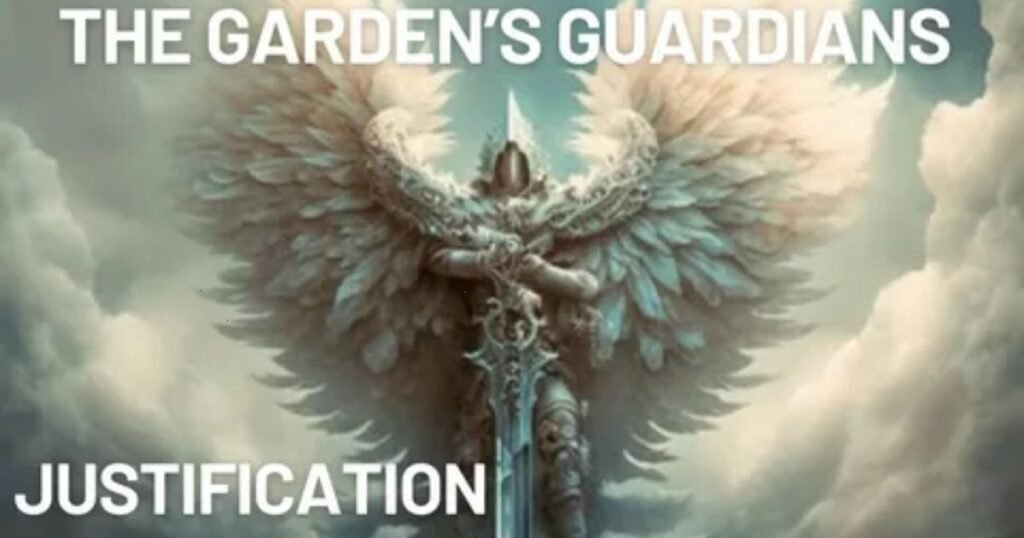
Cherubim appear more frequently in Scripture than any other named angel type. These mighty beings guard God’s holiness and throne, preventing unauthorized access to divine presence. Unfortunately, Renaissance art’s transformation of cherubim into chubby babies (properly called putti) has created massive confusion.
Cherubim Guarding the Garden of Eden
Genesis 3:24 provides the first biblical mention: “After he drove the man out, he placed on the east side of the Garden of Eden cherubim and a flaming sword flashing back and forth to guard the way to the tree of life.”
This assignment reveals cherubim’s primary function: guarding access to God’s presence and holy places. Humanity’s sin necessitated separation from God, and cherubim enforced this barrier. Their flaming sword represented divine judgment preventing sinful humanity from accessing eternal life.
The Four Faces and Their Significance
Ezekiel 10 and Revelation 4 describe cherubim with four faces one of Scripture’s most striking images. Each face represents distinct aspect of creation:
- Lion face: Majesty, courage, royalty king of wild beasts
- Ox face: Service, strength, sacrifice king of domestic animals
- Human face: Intelligence, dominion, relationship king of creation
- Eagle face: Transcendence, vision, swiftness king of birds
| Face | Symbolism | Domain |
|---|---|---|
| Lion | Majesty, courage | Wild animals |
| Ox | Service, strength | Domestic animals |
| Human | Intelligence, dominion | All creation |
| Eagle | Transcendence, vision | Birds of the air |
These four faces represent completeness of God’s creation under His sovereign rule. Cherubim embody all living creatures acknowledging divine authority.
Cherubim on the Ark of the Covenant
Exodus 25:18-22 commanded Moses to craft two golden cherubim atop the ark’s mercy seat. Their wings overshadowed the place where blood was sprinkled for atonement. God promised: “There, above the cover between the two cherubim that are over the ark of the covenant law, I will meet with you” (Exodus 25:22).
This placement carries profound theological significance. Cherubim guard holiness while God’s presence manifests between them. The mercy seat provides access to God through sacrifice blood must be shed before sinful humans can approach. Cherubim don’t prevent this approach but frame it, emphasizing both God’s holiness and His provision for fellowship.
Eyes Symbolizing God’s Omniscience
Ezekiel describes cherubim covered with eyes (Ezekiel 10:12). These eyes represent divine omniscience nothing escapes God’s all-seeing knowledge. The imagery unsettles us precisely because it should. God observes everything, judges perfectly, and knows all hidden things.
Cherubim’s eye-covered forms remind us that serving before God’s throne means participating in His perfect knowledge and judgment. These aren’t decorative features but theological statements about divine nature.
Living Creatures and Ophanim: The Most Mysterious Angels
Ezekiel’s visions present Scripture’s most bewildering angelic descriptions. The prophet saw things so strange that he struggled finding adequate words. These living creatures and wheel angels (ophanim) stretch human comprehension to its limits.
Ezekiel’s Vision of the Living Creatures
Ezekiel 1:4-14 describes the prophet’s encounter near the Chebar River. He saw four living creatures emerging from fire and brilliant light. Their appearance defied easy categorization part human, part animal, part supernatural.
Living creatures’ characteristics include:
- Four faces on each being (human, lion, ox, eagle)
- Four wings with human hands underneath
- Legs straight with feet like burnished bronze
- Bodies sparkling like burning coals or torches
- Fire moving back and forth between them constantly
- Lightning flashing from the fire continuously
- Movement swift as lightning with no turning
Ezekiel later identifies these living creatures as cherubim (Ezekiel 10:20). This identification shows that angelic beings can appear differently depending on context and the prophet’s perspective. Truth transcends our limited descriptive capacity.
The Wheel Angels: Ophanim Explained
Ezekiel 1:15-21 introduces wheels accompanying the living creatures. The Hebrew term ophan means wheel or circle. These aren’t typical wheels but living, intelligent beings participating in God’s throne-chariot (merkabah).
Ophanim features and symbolism:
| Feature | Symbolic Meaning |
|---|---|
| Wheels intersecting at right angles | God’s sovereignty moves in all directions simultaneously |
| Rims full of eyes | Divine omniscience and perfect awareness |
| Wheel within wheel | Complexity and inscrutability of divine purposes |
| Bronze/amber color | Divine glory and righteous judgment |
| Moving with living creatures | Perfect unity and coordination in God’s will |
Wheels Within Wheels Covered With Eyes
Ezekiel 1:18 provides unsettling detail: “Their rims were high and awesome, and all four rims were full of eyes all around.” Imagine wheels taller than buildings, their circumferences studded with countless watchful eyes. This imagery disturbs modern readers precisely because it should.
Ancient Near Eastern culture understood throne-chariots differently than we do. Kings rode elaborate chariots symbolizing power and mobility. God’s throne-chariot (His divine vehicle) would naturally surpass all earthly counterparts. The wheels suggest God’s omnipresence He moves in all directions simultaneously, observing everything.
Jewish mysticism later developed extensive interpretations of Ezekiel’s chariot vision (Merkabah mysticism). While some speculation ventures beyond Scripture, the basic reality remains: these angels participate in bearing God’s presence through creation.
The Relationship Between Living Creatures and Cherubim
Ezekiel 10 explicitly identifies the living creatures as cherubim. This identification initially seems confusing earlier descriptions of cherubim don’t match Ezekiel 1 perfectly. However, this teaches us that angelic beings may appear differently in varying contexts.
Both John’s Revelation 4 and Ezekiel’s visions show four living creatures around God’s throne, yet details differ. John describes them with multiple eyes and continuous worship. Ezekiel emphasizes their mobility and fire. These aren’t contradictions but different perspectives on the same magnificent reality.
General Angels: The Messengers Throughout Scripture
Beyond specialized categories, countless angels serve throughout Scripture as messengers, warriors, and ministers. These general angels appear most frequently in biblical narrative, interacting directly with humans.
Angels Appearing in Human Form
Hebrews 13:2 warns: “Do not forget to show hospitality to strangers, for by so doing some people have entertained angels without realizing it.” This verse confirms angels can appear as ordinary humans, completely concealing their true nature.
Examples of angels appearing as ordinary humans:
- Abraham’s three visitors before Sodom’s destruction (Genesis 18)
- The angel calling Gideon to deliver Israel (Judges 6)
- Manoah’s visitor announcing Samson’s birth (Judges 13)
- Angels at Jesus’ tomb appearing as men in white (Luke 24:4)
- Angels freeing apostles from prison (Acts 5:19)
Why do angels sometimes conceal their identity? Strategic purposes often require human interaction without triggering fear. An ordinary-looking messenger can deliver information without causing the recipient to collapse in terror. When angels reveal their glory, recipients invariably respond with overwhelming fear.
The Mighty Acts Angels Perform
Scripture records angels accomplishing tasks impossible for humans. Daniel 6:22 describes an angel shutting lions’ mouths, protecting Daniel overnight. Acts 12:7 details an angel breaking Peter’s chains and opening iron gates. Matthew 28:2 records an angel rolling away Jesus’ tomb’s massive stone sealed by Roman authority and too heavy for women to move.
Angelic interventions in Scripture include:
- Protecting: Shadowing believers from harm (Psalm 91:11)
- Delivering: Breaking bonds and opening prison doors (Acts 5:19, 12:7)
- Destroying: Executing judgment on God’s enemies (2 Kings 19:35)
- Announcing: Bringing crucial messages from heaven (Luke 1:26-38)
- Guiding: Directing servants of God strategically (Acts 8:26)
- Warring: Fighting spiritual battles invisibly (2 Kings 6:17)
Their power far exceeds human capabilities. Where we struggle, they accomplish effortlessly. This demonstrates that spiritual warfare and divine purposes require supernatural resources beyond human strength.
Angels Holding Swords as Warriors
Military imagery dominates angelic descriptions. Numbers 22:31 describes the angel blocking Balaam’s path holding a drawn sword. Joshua 5:13-15 records Joshua encountering “the commander of the army of the LORD” with drawn sword. Psalm 103:20-21 calls angels “mighty ones” who are “his hosts.”
Angels function as God’s standing army, executing His will with military precision. They don’t negotiate or deliberate they obey instantly and completely. This martial nature contradicts popular culture’s gentle angel imagery but aligns perfectly with Scripture’s consistent portrayal.
Angels in the Life and Ministry of Christ
Angels surround Jesus’ entire earthly journey, from announcing His conception to promising His return. Their involvement demonstrates Christ’s cosmic significance heaven itself participates in the Incarnation.
Angelic Announcements of Jesus’ Birth
Gabriel appeared to Zechariah announcing John the Baptist’s miraculous birth (Luke 1:11-20). Zechariah’s doubt resulted in temporary muteness a mild judgment for questioning divine promise. Months later, Gabriel visited Mary declaring Jesus’ virgin conception (Luke 1:26-38). Mary’s humble acceptance contrasts sharply with Zechariah’s skepticism.
Angels appeared to Joseph repeatedly in dreams, guiding him to protect Mary and Jesus (Matthew 1:20-21, 2:13). These angelic interventions preserved the Messiah’s life during Herod’s murderous rage.
The heavenly host’s appearance to shepherds remains Scripture’s most dramatic angel announcement. Luke 2:13-14 describes “a great company of the heavenly host” praising God and declaring peace on earth. This wasn’t gentle carol-singing but powerful proclamation of cosmic significance.
Angels Ministering to Jesus During His Earthly Life
After Jesus’ wilderness temptation, angels came and attended Him (Matthew 4:11). Following His agonizing prayer in Gethsemane, an angel appeared strengthening Him (Luke 22:43). Even the Son of God required angelic ministry during His earthly mission.
This demonstrates Jesus’ genuine humanity. Though fully divine, Christ voluntarily limited Himself, experiencing human weakness and need. Angels served Him as they serve all believers as ministering spirits sent to help heirs of salvation.
Angels at the Resurrection and Ascension
Matthew 28:2-7 records an angel descending, rolling away the stone, and announcing Christ’s resurrection. The angel’s appearance was “like lightning, and his clothes were white as snow.” Guards became like dead men from fear. The same angels humans find terrifying serve as heralds of our salvation.
When Jesus ascended, two angels appeared asking why disciples stared into heaven (Acts 1:10-11). They promised Jesus would return the same way He departed. Angels bookended Christ’s earthly ministry announcing His birth and promising His return.
Jesus’ Teaching About Angels and Judgment
Jesus taught extensively about angels’ role in final judgment. Matthew 13:41-43 describes the Son of Man sending angels to remove evildoers from His kingdom. Matthew 25:31 promises Christ will come “with all his angels” to judge nations. Angels execute divine justice under Christ’s authority.
Luke 15:10 reveals angels rejoice over repenting sinners. Luke 16:22 describes angels carrying Lazarus to Abraham’s side. Angels observe human spiritual drama, participating emotionally in heaven’s priorities.
Angelic Activity in Acts and the Early Church
Angels remained active after Christ’s ascension, guiding the early church’s expansion. The book of Acts records numerous angelic interventions directing believers strategically.
Angels Guiding the Spread of the Gospel
Acts 8:26 records an angel directing Philip toward the Ethiopian eunuch a pivotal moment for gospel expansion into Africa. Acts 10:3 describes Cornelius receiving an angelic vision leading to Peter’s visit and the first Gentile conversions. These weren’t coincidental encounters but divinely orchestrated appointments arranged by angels.
Paul received angelic reassurance during a life-threatening storm (Acts 27:23). The angel promised Paul would stand before Caesar, confirming God’s purposes despite dire circumstances. Angels serve believers by clarifying divine will and strengthening faith during trials.
Angels Executing Divine Judgment
Acts 12:23 records Herod Agrippa struck down by an angel for blasphemy. “Immediately, because Herod did not give praise to God, an angel of the Lord struck him down, and he was eaten by worms and died.” This swift judgment demonstrates angels’ role enforcing divine justice.
The execution happened immediately no delay, no second chance. Herod accepted worship belonging only to God, and angelic judgment followed instantly. This sobering account reminds us that angels serve God’s righteousness, not human comfort.
Paul’s Theological Insights About Angels
Paul provided crucial theological framework for understanding angelic beings. Colossians 2:18 warns against angel worship honoring them inappropriately. Angels deserve respect, not veneration. They’re fellow servants, not objects of worship.
1 Corinthians 6:3 stunningly declares believers will judge angels. This future role elevates redeemed humanity above angels in certain respects. Galatians 1:8 asserts even angels cannot alter the gospel truth transcends angelic authority.
Hebrews explains Christ’s superiority to angels extensively (Hebrews 1-2). While angels serve God magnificently, Jesus reigns supreme as God’s Son. No angel could accomplish redemption only the God-man could reconcile humanity to the Father.
Angels in the Book of Revelation
Revelation features more angelic activity than any other biblical book. These celestial beings execute judgment, announce divine purposes, and participate in cosmic conflict. John’s visions reveal angels’ central role in end-times events.
Seven Angels With Seven Trumpets
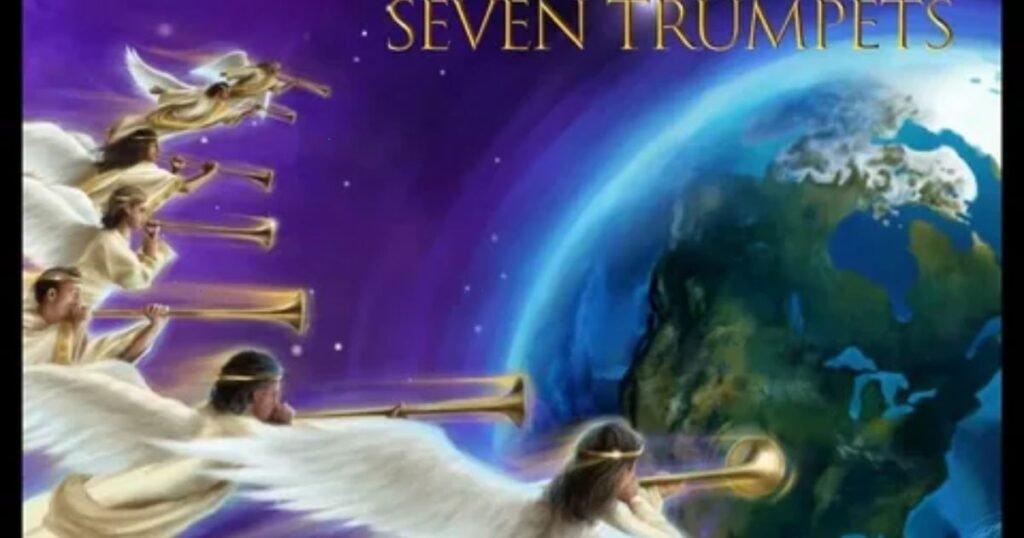
Revelation 8-11 describes seven angels sounding trumpets sequentially, each unleashing specific judgment:
- First trumpet: Hail, fire, and blood destroy earth’s third (Revelation 8:7)
- Second trumpet: Burning mountain cast into sea (Revelation 8:8-9)
- Third trumpet: Star named Wormwood poisons fresh waters (Revelation 8:10-11)
- Fourth trumpet: Sun, moon, and stars partially darkened (Revelation 8:12)
- Fifth trumpet: Demonic locusts released to torment humanity (Revelation 9:1-11)
- Sixth trumpet: Four bound angels release massive army (Revelation 9:13-19)
- Seventh trumpet: Christ’s kingdom announced (Revelation 11:15)
These trumpet judgments demonstrate progressive intensity of divine wrath. Angels serve as heralds announcing each phase of God’s righteous judgment against rebellious humanity.
Angels Pouring Out God’s Wrath
Revelation 16 describes seven bowl judgments God’s final wrath poured out by angels. These surpass trumpet judgments in severity and scope. Angels execute these judgments without hesitation, demonstrating their complete alignment with divine justice.
The bowl judgments include painful sores, seas turned to blood, rivers becoming blood, scorching sun, darkness over the beast’s kingdom, Euphrates dried up, and final earthquake destroying cities. Angels pour out each judgment methodically, fulfilling God’s righteous decrees.
Michael’s War Against the Dragon
Revelation 12:7-9 describes cosmic warfare: “Michael and his angels fought against the dragon, and the dragon and his angels fought back. But he was not strong enough, and they lost their place in heaven. The great dragon was hurled down that ancient serpent called the devil, or Satan, who leads the whole world astray.”
This battle represents Satan’s final expulsion from heaven. Though he previously had access to accuse believers (Job 1:6, Revelation 12:10), Michael’s victory revokes that access permanently. The dragon and his angels lose decisively, cast to earth where their time is short.
The Angel Binding Satan
Revelation 20:1-3 depicts a powerful angel descending with the key to the Abyss and a great chain. He seizes the dragon (Satan) and binds him for a thousand years, throwing him into the Abyss. This demonstrates angelic authority over even the most powerful fallen angel.
Satan’s binding and later release (Revelation 20:7) shows God’s complete sovereignty over evil. Angels serve as instruments executing divine sentences imprisoning evil when God decrees and releasing it when judgment requires.
The Biblical Truth About Guardian Angels
Popular culture assumes everyone has a personal guardian angel watching over them constantly. Does Scripture actually teach this? The answer requires careful examination of relevant passages.
What Scripture Actually Teaches About Personal Protection
Psalm 91:11-12 promises: “For he will command his angels concerning you to guard you in all your ways; they will lift you up in their hands, so that you will not strike your foot against a stone.” This passage clearly indicates angelic protection for believers.
Matthew 18:10 records Jesus saying: “See that you do not despise one of these little ones. For I tell you that their angels in heaven always see the face of my Father in heaven.” This verse suggests children have angels who represent them before God. However, whether these are individual guardians or collective ministering spirits remains unclear.
Acts 12:15 shows believers thought Peter had an assigned angel. When Rhoda announced Peter at the door, believers responded: “It must be his angel.” This indicates first-century Christians believed in some form of personal angelic assignment.
Communal Versus Individual Angelic Ministry
Scripture emphasizes collective protection more than individual assignments. Psalm 34:7 declares: “The angel of the LORD encamps around those who fear him, and he delivers them.” This language suggests communal protection one angel surrounding a group.
Hebrews 1:14 asks: “Are not all angels ministering spirits sent to serve those who will inherit salvation?” The plural “those” indicates angels minister to believers generally, not necessarily one-to-one. Angels serve the community of faith collectively.
Angels Assigned to Nations and Groups
Daniel 10:13, 20-21 reveals angels assigned to nations. Michael is identified as Israel’s prince. A spiritual prince resisted Daniel’s angelic messenger for 21 days until Michael arrived helping. Revelation 1-3 addresses angels of seven churches, suggesting corporate angelic assignments.
| Assignment | Scripture | Function |
|---|---|---|
| Michael Israel’s prince | Daniel 12:1 | Defending God’s people |
| Prince of Persia | Daniel 10:13 | Opposing God’s messenger |
| Prince of Greece | Daniel 10:20 | Future spiritual authority |
| Angels of churches | Revelation 2-3 | Representing congregations |
This evidence suggests angels have corporate responsibilities more clearly than individual ones. While personal protection occurs, Scripture doesn’t definitively teach everyone has one assigned guardian angel.
Satan’s Fall and the Origin of Fallen Angels
Understanding biblically accurate angels requires examining their dark counterparts. Fallen angels rebelled against God, creating spiritual opposition believers face constantly.
Satan as a Fallen Cherub
Ezekiel 28:12-19 describes Satan’s original state, though couched in prophecy against Tyre’s king. The passage says: “You were the anointed cherub who covers…You were blameless in your ways from the day you were created till wickedness was found in you.”
Satan wasn’t originally evil. He was created perfect, wise, beautiful an anointed cherub serving at God’s throne. His position was exalted beyond measure. He walked among fiery stones on God’s holy mountain. This imagery suggests unparalleled access to divine presence.
The Meaning of ‘Satan’ and ‘Lucifer’
“Satan” translates the Hebrew word meaning adversary or accuser. This name describes his current function opposing God and accusing believers (Revelation 12:10). “Lucifer” appears in some translations of Isaiah 14:12, translating Hebrew “helel ben shachar” shining one, son of the dawn.
The devil’s names and titles reveal his nature:
- Satan: Adversary, opposer of God’s purposes
- Devil: Slanderer throwing false accusations
- Dragon: Fierce, destructive ancient enemy
- Serpent: Deceiver from Eden onward
- Prince of this world: Current earthly authority (John 12:31)
- Father of lies: Originator of deception (John 8:44)
Pride as the Root of Angelic Rebellion
Isaiah 14:12-15 records Satan’s prideful ambition through five “I will” statements:
- “I will ascend to the heavens”
- “I will raise my throne above the stars of God”
- “I will sit enthroned on the mount of assembly”
- “I will ascend above the tops of the clouds”
- “I will make myself like the Most High”
Pride destroyed perfection. Ezekiel 28:17 explains: “Your heart became proud on account of your beauty, and you corrupted your wisdom because of your splendor.” Satan’s exalted position became his downfall he desired equality with God rather than grateful service.
Jesus witnessed Satan’s fall: “I saw Satan fall like lightning from heaven” (Luke 10:18). This cosmic rebellion resulted in expulsion and eternal judgment.
Other Fallen Angels: Demons and Spiritual Rebellion
Satan didn’t rebel alone. Revelation 12:4 suggests he took one-third of angels with him: “His tail swept a third of the stars out of the sky and flung them to the earth.”
The Sons of God in Genesis Six
Genesis 6:1-4 presents one of Scripture’s most controversial passages: “The sons of God saw that the daughters of humans were beautiful, and they married any of them they chose…The Nephilim were on the earth in those days.”
Who were these “sons of God”? Ancient Jewish interpretation identified them as angels. Jude 6 and 2 Peter 2:4 describe angels who “did not keep their positions of authority but abandoned their proper dwelling” and were imprisoned in chains. These passages suggest angelic rebellion beyond Satan’s initial fall.
Angels Bound in Chains of Darkness
2 Peter 2:4 declares: “God did not spare angels when they sinned, but sent them to hell, putting them in chains of darkness to be held for judgment.” Jude 6 adds: “Angels who did not keep their positions of authority…he has kept in darkness, bound with everlasting chains for judgment.”
Not all fallen angels roam freely. Some committed sins so grievous God imprisoned them immediately. These bound angels await final judgment, demonstrating that even among rebels, degrees of sin and punishment exist.
Demons and Unclean Spirits in the New Testament
Jesus frequently encountered demons during His earthly ministry. These unclean spirits possessed people, causing physical and mental torment. Mark 5:1-20 describes Legion a demon identifying as many inhabiting one man.
Characteristics of demons in Scripture:
- Recognize Jesus as God’s Son (Mark 1:24)
- Fear their coming judgment (Matthew 8:29)
- Possess and afflict humans (Matthew 17:15-18)
- Cause physical ailments and mental distress (Mark 9:17-27)
- Prefer inhabiting bodies to wandering (Matthew 12:43-45)
- Operate under hierarchical organization (Ephesians 6:12)
- Submit to Jesus’ authority (Luke 4:35-36)
Summary: The Magnificent Reality of Biblical Angels
Biblically accurate angels bear little resemblance to Valentine’s Day cherubs or greeting card imagery. Scripture reveals powerful, purposeful celestial beings who inspire fear, execute judgment, and wage cosmic warfare. They proclaim God’s holiness, guard sacred spaces, and minister to believers according to divine will.
We’ve examined seraphim with six wings continuously worshiping God’s holiness. We’ve encountered cherubim with four faces representing all creation under divine sovereignty. We’ve witnessed ophanim wheels within wheels covered with eyes, participating in God’s throne-chariot. We’ve seen archangels like Michael and Gabriel serving specific missions in salvation history.
These angelic beings exist primarily to glorify God, not to make humans comfortable. When they appear, they say “Fear not” because their glory genuinely terrifies witnesses. They roll away stones, break chains, shut lions’ mouths, and strike down armies. They announce world-changing events and execute divine judgments without hesitation.
Understanding angels correctly deepens our reverence for God. If celestial beings veil themselves before His holiness, how much more should we approach with awe? If mighty warriors tremble at His presence, how can we treat worship casually?
Angels remind us that a greater reality exists beyond our physical world. Spiritual warfare rages invisibly around us. Divine purposes unfold through angelic ministry. God’s holiness transcends human comprehension, requiring mediators who bridge heaven and earth.
The next time you see a cute cherub decoration, remember the truth: biblical cherubim are multi-faced guardians covered with eyes, wielding flaming swords, and executing divine judgment. That’s the magnificent reality Scripture presents angels worthy of the God they serve, fearsome in their holiness, powerful in their ministry, and ultimately victorious in Christ.
Study Scripture directly rather than relying on cultural representations. The Bible’s rich angelology reveals God’s cosmic order, His meticulous care for creation, and His ultimate sovereignty over all beings celestial and terrestrial. These truths should inspire worship, encourage faith, and deepen our understanding of the spiritual realm where angels continuously proclaim: “Holy, holy, holy is the LORD Almighty; the whole earth is full of his glory.”